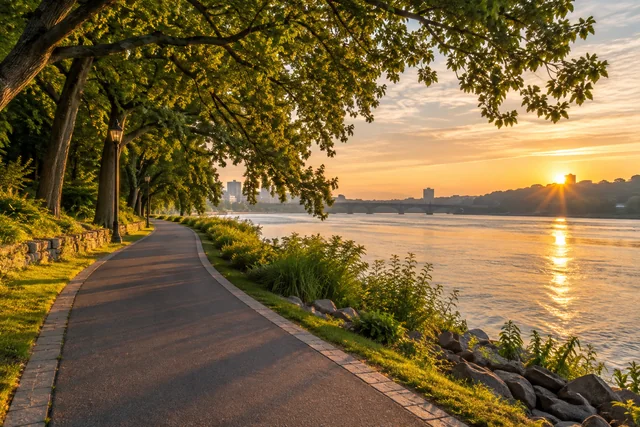
Plan a local loop with more than distance in mind
A route is more than a line of a certain length. Surface, crossings, lighting and the places where people can regroup all affect how a local loop feels, especially when it is used by a group.

Walk the uncertain sections
Check unfamiliar paths before relying on a map. Look for changes in surface, narrow points and road crossings. Consider the time of day the route will be used and whether the conditions change with weather. A route that feels straightforward alone may be awkward for a larger group moving at different speeds.
Give the route clear decisions
Choose recognisable turning points and avoid unnecessary complexity. Identify places where someone can shorten the route or return safely if needed. Share the route in a format participants can understand, and explain any important limitations. Do not rely on everyone owning the same watch or navigation app.
Review it after use
Ask which sections felt comfortable and which created confusion. Update the route when access or conditions change instead of treating the first version as permanent. Respect other users of shared paths and local rules. A good community route makes it easier to move together while leaving enough flexibility for different needs and ordinary changes in the environment.